Plan a Dinner Party Menu Without the Stress
You’ve picked the date. You’ve sent the invite. And now you’re staring at a blank page trying to figure out what on earth to feed six people without spending your entire evening trapped in the kitchen.
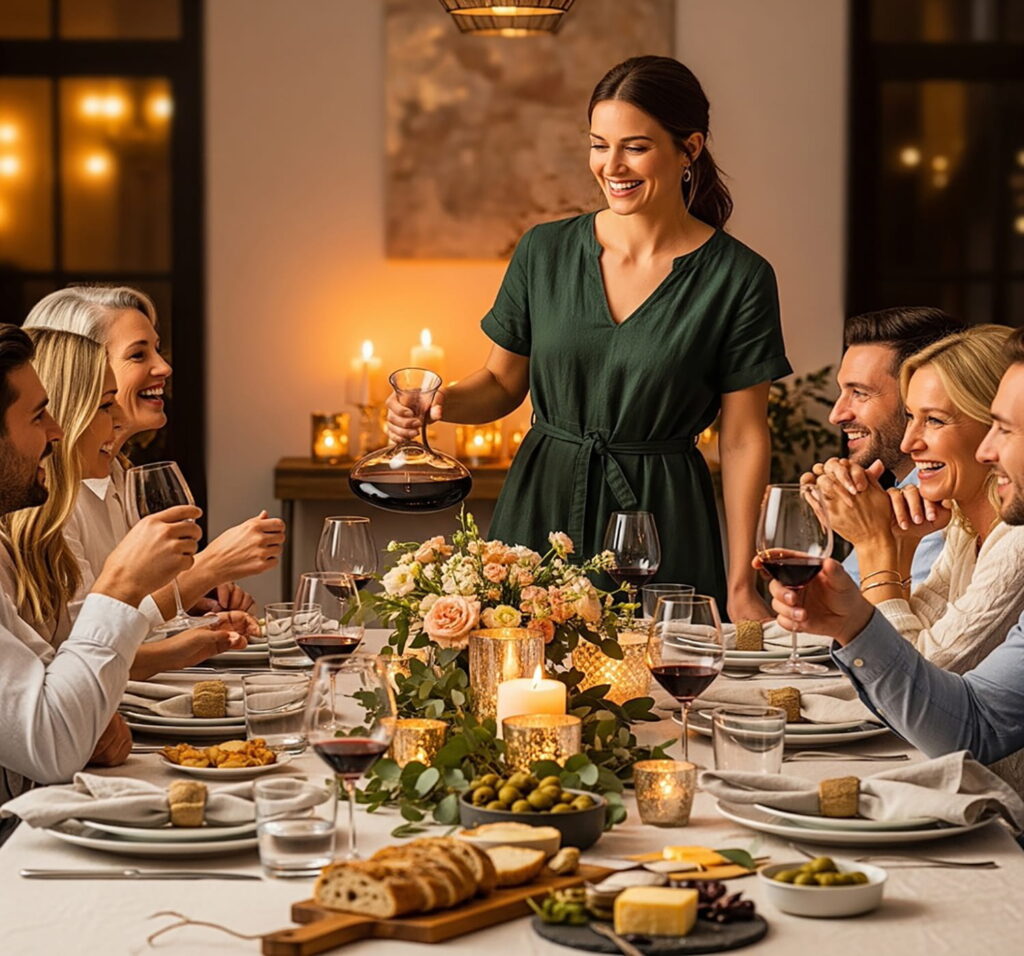
Here’s the truth: learning how to plan a dinner party menu isn’t about finding the fanciest recipes — it’s about building a plan that lets you actually be at your own party. That’s the difference between a host who’s frazzled and flushed at the stove and one who’s pouring wine and laughing at the table. Let’s crack the code on this one, DCS-style.
Start With the Shape of the Evening
Before you touch a single recipe, get honest about the shape of the evening. Ask yourself:
- Who’s coming? A cozy dinner for four allows for more hands-on courses than a table of ten.
- What’s the occasion? A birthday dinner has different energy than a low-key Sunday gathering.
- What dietary needs are in the mix? Better to know now than to find out at the table.
- How much time do you realistically have? Be honest about your after-work reality, not your Pinterest-board fantasy.
Naming these constraints upfront means your menu works with your life, not against it.
Match the Menu to Your Bandwidth
Once you know what the night needs to be, get real about what you can pull off well. This is where a lot of hosts get into trouble — reaching for a menu that would be perfect if you had a sous chef and six extra hours.
A simple rule that never fails: one hero dish, two supporting players, one no-cook element.
- Hero dish: the main course that gets your attention and effort.
- Supporting players: a side and a starter that can be prepped ahead or require minimal last-minute work.
- No-cook element: a good cheese board, a simple salad, or a store-bought dessert dressed up with fresh fruit. Nobody will know, and you’ll thank yourself.
Also take stock of your oven and stovetop real estate. If everything needs the oven at a different temperature at the same time, you’ve built yourself a traffic jam. Choose dishes that can share space — or that don’t need the oven at all.
Sample Menu Frameworks
Here are two examples of how to apply the hero/supporting/no-cook structure to create a balanced, manageable evening:
- Cozy Roast Dinner: Hero (Slow-roasted leg of lamb with herbs), Supporting (Roasted root vegetables, warm farro salad), No-cook (A simple platter of figs, prosciutto, and local cheeses).
- Summer Soirée: Hero (Grilled salmon with lemon gremolata), Supporting (Charred asparagus, chilled cucumber & dill salad), No-cook (Classic Caprese skewers and fresh berries with mint).
Build a Menu That Flows
Now for the fun part: building a menu that flows as much as it satisfies.
- Start light. A simple starter — soup, a small salad, or a shared appetizer — sets the tone without filling anyone up too early.
- Build to your hero course. Let your main dish be the star, with sides that complement rather than compete.
- End on something memorable, not complicated. Dessert doesn’t need to be elaborate to be the thing people remember. A beautifully plated simple dessert often outshines something fussy.
A few pairing principles to keep things cohesive:
- Repeat one or two key ingredients or flavors across courses (citrus, herbs, a particular spice) to tie the meal together.
- Balance rich with bright — if your main is heavy, keep your starter and sides fresh and acidic.
- Consider color on the plate and the table as a whole. A monochrome dinner, however delicious, reads flat in photos and in person.
Write your full menu down, then write a prep timeline next to it — what can be made a day ahead, what happens an hour before, and what’s truly last-minute. (If you want a full timeline breakdown, that’s a DCS guide of its own — stay tuned.)
Stress-Free Prep Timeline
A successful dinner party relies on spreading the workload out. Follow this 24-hour checklist to stay ahead of the clock:
- Day Before: Shop for all ingredients, prep any cold items, and set the table.
- Morning Of: Do all vegetable chopping and sauce prep. If your hero dish requires a marinade, get it done now.
- Hour Before: Focus entirely on finishing touches (e.g., roasting the hero, plating the cold sides). Pour yourself a glass of wine.
Let the Plan Do Its Job
Here’s the part that’s easy to skip: once your menu is built and your prep list is set, trust it. The whole purpose of planning is so you don’t have to think on the fly while your guests are walking through the door.
Set your table the night before if you can — see our guide to effortlessly elegant table settings. Prep what’s prep-able. Then, when the doorbell rings, let go of the checklist and be present. A dinner party isn’t a performance — it’s a chance to gather people you love around a table you built with intention. Enjoy, don’t stress. That’s the whole point.