Easy Brunch Recipes That Look Expensive But Cost Almost Nothing
Easy brunch recipes don’t have to cost a fortune to look impressive. You can create restaurant-quality dishes that wow your guests while keeping your brunch budget surprisingly low. The secret lies in smart shopping, simple techniques, and knowing which ingredients deliver maximum visual impact for minimal cost. Without doubt, presentation matters more than price tags when it comes to creating that elevated brunch experience. Ready to make your next brunch unforgettable without the financial stress? Let’s explore practical recipes and plating strategies that transform affordable ingredients into stunning, memorable dishes everyone will love.
What Makes Brunch Look Expensive
The difference between an expensive restaurant brunch and your budget-friendly homemade spread often has nothing to do with taste. What separates them is how the food looks on the plate.
Visual presentation matters most
Your eyes eat first. This fact drives the entire restaurant industry, and you can use it to make your easy brunch recipes appear far more expensive than they are. A plain scrambled egg on a paper plate reads “quick breakfast.” That same egg on a white ceramic plate with a sprig of parsley and a sprinkle of paprika suddenly looks like something you’d order at a boutique café.
Color plays a significant role in perceived value. Monochromatic dishes look flat and uninteresting, while plates featuring three or four distinct colors create visual interest. A basic avocado toast transforms when you add red cherry tomatoes, white feta cheese, and green microgreens. The ingredients cost pennies more, but the presentation multiplies the perceived value.
Negative space matters too. Overcrowded plates look cafeteria-style, while dishes with breathing room appear curated and intentional. Restaurant chefs know this trick well. They’ll place a small portion in the center of a large plate, allowing the food to become the focal point.
Quality ingredients in small amounts
You don’t need expensive ingredients everywhere. You need them in the right places. A small amount of smoked salmon is inexpensive but makes your entire brunch spread look upscale. Similarly, a small wedge of good cheese, a handful of fresh berries, or a few slices of prosciutto elevate the entire meal.
The strategy works because these premium items catch attention first. When guests see capers, fresh dill, or real maple syrup on the table, they assume everything else matches that quality level. You’re controlling perception through strategic placement.
Fresh herbs are very affordable per bunch but last for multiple meals. Chop them over finished dishes right before serving. This simple action makes ordinary eggs, potatoes, or fruit look professionally prepared. The movement of chopping herbs tableside also adds theater to your brunch, another restaurant technique that costs nothing.
Proper plating techniques
Height creates drama on the plate. Stack your pancakes instead of laying them flat. Layer your parfaits in clear glasses. Build your breakfast sandwiches tall. Vertical presentation suggests careful preparation and attention to detail.
Sauce placement requires thought. Drizzle hollandaise in a zigzag pattern rather than dumping it on top. Dot berry compote around the plate’s rim. These techniques take five extra seconds but signal professional execution.
Temperature contrast adds another dimension. Serve hot items on warm plates and cold items on chilled ones. The attention to temperature tells guests you’re thinking like a chef, even when working with your brunch budget constraints.
Symmetry works for formal presentations, while asymmetry creates modern, artistic appeal. Choose based on your brunch vibe. A perfectly centered stack of French toast looks classic. Those same slices arranged at an angle with fruit scattered artfully around them look contemporary and expensive.
Wipe your plate edges before serving. Smudges and drips destroy the illusion of careful preparation faster than anything else. Keep a damp towel nearby while plating to clean as you go.
Shopping Smart for Budget Brunch Ingredients
Grocery shopping determines whether your brunch budget stays under control or spirals out of reach. The store you choose, the season you’re in, and the ingredients you prioritize will make or break your ability to create easy brunch recipes without overspending.
Buy seasonal produce
Seasonal produce costs significantly less than out-of-season options. Strawberries in June are very cheap per pound, while those same berries in December cost much more. Your brunch budget stretches further when you align your menu with what farmers are currently harvesting.
Summer brings berries, tomatoes, and stone fruits at rock-bottom prices. Build your brunch around berry parfaits, tomato-based shakshuka, or peach French toast. Fall delivers apples, pears, and squash. Winter citrus shows up cheap and abundant. Spring asparagus costs less in April than any other month.
Farmers markets during peak season often beat grocery store prices, particularly in the final hour before closing. Vendors would rather sell remaining produce at a discount than pack it back up. You’ll find deals on herbs, greens, and whatever fruit is flooding the market that week.
Choose versatile base ingredients
Eggs anchor most easy brunch recipes and are very low-cost per dozen. They work in quiches, benedicts, scrambles, and frittatas. Buy them in bulk when on sale since they keep for weeks.
Flour, butter, and milk create the foundation for crepes, pancakes, and baked goods. A large bag of flour is inexpensive and makes enough crepes for a month of brunches. Butter stores well in the freezer, allowing you to stock up during sales.
Potatoes work as hash, home fries, or rösti. A large bag is affordable and feeds eight people easily. Onions, garlic, and carrots cost pennies per serving but build flavor in every savory dish.
Skip specialty stores
High-end specialty markets charge premium prices for the same ingredients regular grocery stores carry. That organic flour is much more expensive at the specialty shop compared to the chain store down the street. In fact, most basic ingredients are identical across stores, just repackaged with fancier labels.
Ethnic grocery stores beat mainstream markets on specific items. Asian markets sell fresh herbs in massive bunches for a low price, while regular stores charge significantly more for tiny plastic containers. Latin markets offer better prices on avocados, limes, and cilantro. Middle Eastern shops discount tahini, feta, and olive oil.
Discount grocers stock quality staples at significantly lower prices than traditional supermarket prices. Their private-label butter, eggs, and cheese work perfectly for your brunch recipes. You’re paying for food, not branding.
Use pantry staples creatively
That bottle of vanilla extract you bought months ago turns basic French toast into something special. Cinnamon, nutmeg, and cardamom are budget-friendly but last for dozens of brunch meals. A single jar of capers adds restaurant flavor to smoked salmon dishes.
Dried herbs cost less than fresh but work well in cooked dishes like quiches and crepes. Oregano, thyme, and basil stay potent for six months when stored properly. Save fresh herbs for garnishing where their impact shows.
Canned tomatoes are very affordable per can and make excellent shakshuka. Frozen spinach beats fresh for quiches and frittatas at a fraction of the price. Jarred roasted red peppers add color and flavor without the hassle of roasting your own.
Stock transforms water into something that makes your eggs and grains taste richer. During winter, save vegetable scraps in the freezer and boil them into stock. It costs nothing and elevates everything you cook.
Easy Impressive Brunch Recipes for a Low Cost
These easy brunch recipes prove you can feed four people impressive restaurant-style food for an affordable total per dish. Each recipe builds on the shopping strategies and plating techniques already covered, putting them into action with dishes that deliver maximum visual impact.
Eggs Benedict with homemade hollandaise
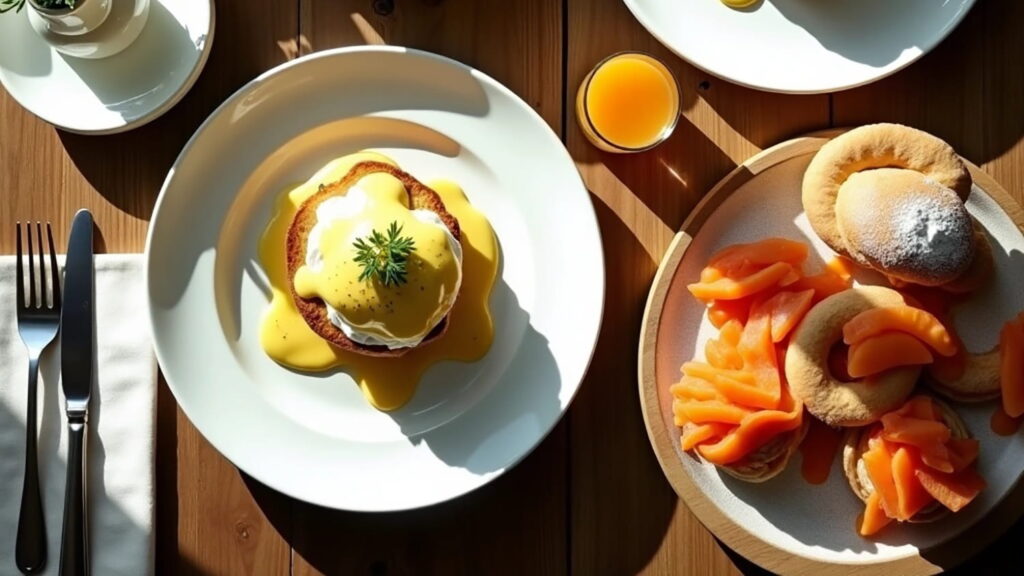
Eggs Benedict scares most home cooks, but the components are inexpensive in total. English muffins, eggs, Canadian bacon, and butter plus lemon for hollandaise are all budget-friendly. The hollandaise takes ten minutes of whisking over low heat. Toast the muffins, poach the eggs in simmering water with a splash of vinegar, and layer everything together. The golden sauce dripping down the sides creates that expensive look restaurants charge a premium to achieve.
French toast with caramelized fruit
Day-old bread works better than fresh for French toast and costs pennies. Slices of brioche or challah from the bakery discount rack are very cheap, eggs and milk are low-cost, and seasonal fruit is affordable. Butter and sugar for caramelization are inexpensive. Whisk eggs with milk, vanilla, and cinnamon. Soak the bread and cook until golden. In order to caramelize the fruit, melt butter and sugar in a pan until bubbling, then add your sliced peaches, apples, or berries. The glossy caramel coating looks professional without requiring any special skills.
Savory crepes with mushroom filling
A batch of crepe batter is inexpensive and makes twelve crepes. Mushrooms, onions, garlic, cream, and fresh thyme are all budget-friendly. The thin, delicate crepes suggest French cooking expertise, but they’re just flour, eggs, milk, and butter whisked together and cooked in a hot pan. Sauté the mushrooms until browned, add cream and herbs, then fold the mixture into the crepes. Stack them on a white plate and garnish with extra thyme.
Smoked salmon bagel board for a crowd
A bagel board feeds eight for an affordable price. Bagels, cream cheese, smoked salmon, capers, and red onion plus cucumber are all budget-friendly when purchased smartly. Slice everything and arrange it on a wooden board with space between items. The variety creates abundance, while the smoked salmon signals upscale brunch. Guests assemble their own combinations, which adds an interactive element that feels special.
Shakshuka in cast iron
This North African dish is very low-cost and serves four. Canned tomatoes, eggs, onion, and peppers are all inexpensive, along with spices from your pantry. Sauté the vegetables, add tomatoes and spices, simmer for fifteen minutes, then crack eggs directly into the sauce. Bake until the eggs set. Serving it straight from the cast iron skillet delivers rustic charm that looks intentional and expensive.
Homemade quiche with fresh herbs
One quiche serves six and is affordable. Store-bought pie crust saves time and is budget-friendly, as are the eggs, cream, cheese, and fresh herbs. Whisk eggs with cream, add cheese and chopped herbs, pour into the crust, and bake for 45 minutes. The golden top and herb-flecked filling photograph beautifully. Slice it into neat wedges and serve on those white plates mentioned earlier.
Making Everything Look Restaurant-Quality
Presentation separates your homemade spread from average weekend cooking. Once you’ve prepared your easy brunch recipes, these finishing techniques turn good food into something guests will photograph before eating.
Garnish with fresh herbs
Fresh herbs deliver instant visual sophistication. Snip parsley, chives, dill, or basil directly over plated dishes in the final seconds before serving. The bright green color pops against neutral backgrounds like eggs, potatoes, or cream-based sauces. Rough chops work better than fine mince because they show texture and movement.
Different herbs signal different cuisines. Dill on your smoked salmon board reads upscale deli. Basil on shakshuka suggests Mediterranean attention to detail. Chives scattered over quiche look like a French bistro made it. Pick the herb that matches your dish’s flavor profile while adding that needed color burst.
Use white plates and simple serving dishes
White plates function as blank canvases that make your food the star. Patterns and colors compete for attention, while plain white focuses eyes on what you’ve cooked. Equally important, white backgrounds make colors appear more saturated and appetizing in photos.
Mismatched vintage white plates work as well as matching sets. Thrift stores stock dozens of white ceramic plates for a very low price each. Clean lines matter more than brand names. Skip novelty shapes and stick with classic rounds or ovals that don’t fight your food for attention.
Wooden boards add warmth to cold items like bagel spreads or charcuterie. Glass bowls showcase layered parfaits. Cast iron skillets double as rustic serving vessels for baked dishes. Match your serving dish to your food’s temperature and style.
Add height to your plating
Flat presentations look forgettable. Build upward by stacking pancakes in offset layers, leaning toast against eggs, or mounding hash browns into small hills. Height creates shadows and dimensions that photograph better while suggesting careful construction.
A spatula or spoon can lift and support elements during plating. In fact, professional chefs use ring molds and guides, but you can achieve similar results by hand with practice.
Create color contrast
Each plate needs at least three distinct colors. Beige eggs need red tomatoes and green herbs. Brown French toast requires white powdered sugar and red berries. Your brunch budget doesn’t increase when you add colorful garnishes, but perceived value does. Position the brightest colors where eyes land first, typically in the center or at twelve o’clock on the plate.
Prep Ahead Tips to Save Money and Time
Preparing components ahead cuts both your brunch budget and morning stress. You’ll spend less by cooking efficiently and avoid last-minute grocery runs that drain your wallet.
Make components the night before
Hollandaise sauce breaks the rules. Make it fresh the morning of serving. However, most other brunch components improve with advance preparation. Chop vegetables for shakshuka and store them in airtight containers. Your onions, peppers, and garlic will be ready to sauté when you wake up.
Crepe batter rests overnight in the fridge, actually producing better results than fresh batter. The flour hydrates fully, creating smoother, more pliable crepes. Mix it before bed and pour straight from the container in the morning.
Quiche filling comes together the night before. Whisk eggs with cream and seasonings, add your cheese and herbs, then refrigerate covered. Pour it into your crust and bake when guests arrive. The filling stays fresh for 24 hours without separating.
Batch cooking strategies
Double your recipes when making easy brunch recipes that freeze well. Crepes stack between parchment paper and freeze for three months. Pull out what you need and reheat in a warm pan.
Caramelized onions take 45 minutes but keep for two weeks refrigerated. Cook a full pound at once and add them to multiple brunches throughout the month. This single batch enhances quiches, crepes, and egg dishes without repeating the time investment.
Elevate Your Brunch for Less
Your brunch budget doesn’t dictate the quality of your spread. For this reason, focus on smart shopping, strategic ingredient choices, and presentation techniques that transform affordable components into restaurant-worthy dishes. Fresh herbs, white plates, and proper plating elevate everything you serve without adding significant cost.
Start with one or two recipes from this collection and master them. Specifically, practice your hollandaise or perfect your crepe technique. Your confidence will grow with each brunch you host. Before long, you’ll create impressive spreads that guests assume cost far more than you actually spent. The secret is out: expensive-looking brunch doesn’t require an expensive budget.