Backyard Lawn Games for Summer Entertaining
There’s a specific kind of ease that shows up at a party once someone sets up a cornhole board. Guests who were hovering near the drink table suddenly have somewhere to be. Conversations start over a shared miss on the toss. Kids and adults end up on the same team without anyone planning it. Good lawn games don’t just fill time at a summer gathering — they give it a pulse.
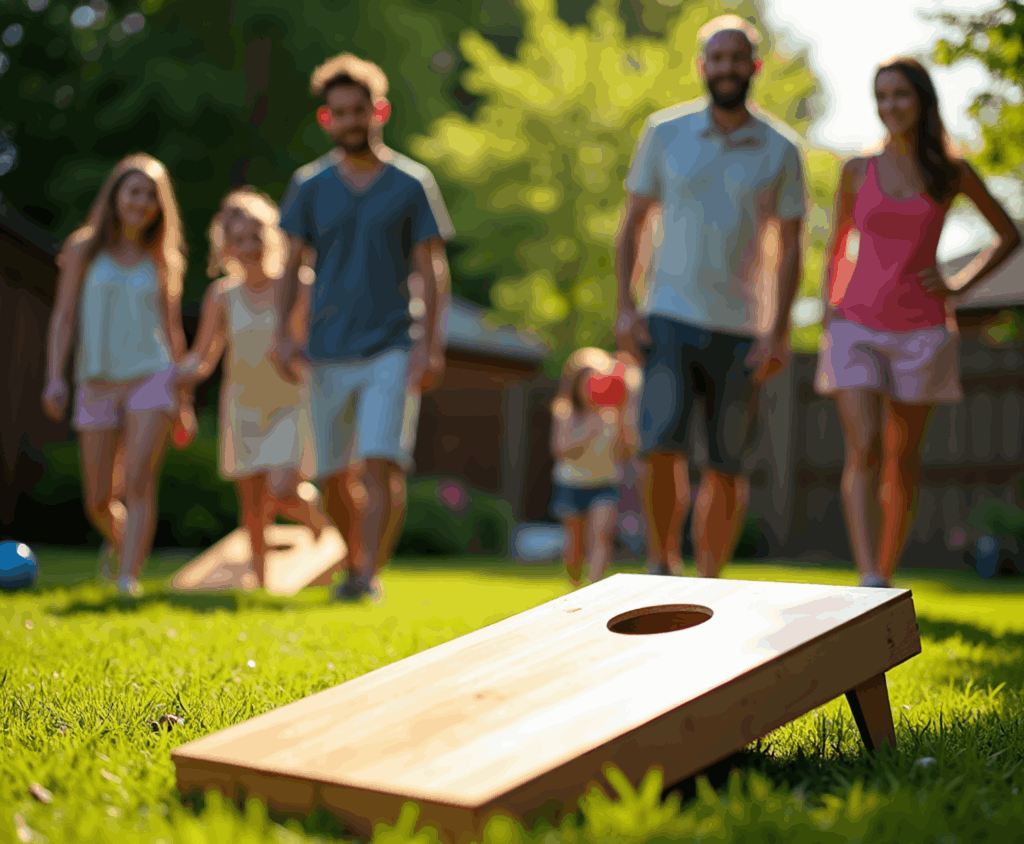
Classic Lawn Games Worth the Setup
Cornhole. The reigning champion of backyard games for a reason: easy to learn, endlessly replayable, and just competitive enough to spark friendly trash talk. A single board works for small groups; two boards set up in a tournament bracket can carry an entire afternoon.
Giant Jenga. Oversized wooden blocks turn a familiar tabletop game into a full-body spectacle. It’s a natural gathering point — people cluster around to watch the tower wobble, and the collective gasp when it finally falls is half the fun.
Ladder Toss (Ladder Golf). Underrated and wildly satisfying once guests get the hang of it. The rhythm of wrapping bolas around a ladder rung is oddly hypnotic, and it plays well for guests who want something a notch more skill-based than cornhole.
Bocce Ball. A slower, more social game that rewards strategy over strength, which makes it a great fit for mixed-age groups. It also works beautifully as background entertainment — guests can play a few rounds while chatting, without needing full focus.
Giant Yard Dice or Yardzee. A supersized version of the dice game your family already knows, played on the lawn with oversized foam or wooden dice. Low setup, easy rules, and a great option for guests who want to sit and roll rather than run around.
Thematic Pairings: Refreshments & Games
- Pair Cornhole with Backyard BBQ: Classic American favorites like BBQ skewers, sliders, or grilled corn go hand-in-hand with the competitive vibe of cornhole.
- Pair Bocce with Italian-Style Spritzes: Lean into the leisurely, social nature of bocce by serving light antipasto platters, focaccia, or refreshing Aperol spritzes.
- Pair Giant Jenga with Easy-to-Hold Drinks: Because Jenga involves more focus and hand coordination, pair it with simple, pre-mixed cocktails or canned beverages that don’t require fancy glassware.
Space & Setup Considerations
Before you commit to a game (or three), take a lap around your actual space:
- Measure before you buy. Cornhole needs roughly 30 feet of clear space end to end; ladder toss needs about 15. Bocce and giant Jenga are more forgiving for smaller yards.
- Think about surface. Bocce rolls best on flat grass or a dirt path; cornhole and ladder toss are more forgiving on uneven ground.
- Plan for shade and shadows. Games positioned in direct afternoon sun get abandoned fast. If your yard doesn’t offer natural shade, a market umbrella near the game area goes a long way.
- Create distinct zones: Ensure game areas are physically separated from high-traffic zones like food, drink stations, and seating areas. A stray bocce ball rolling through the charcuterie spread is a memorable party moment for all the wrong reasons.
- Use predefined boundaries: Use natural markers like flower beds, lawn edging, or even potted plants to subtly signal where a game ends and the seating area begins. This prevents guests from inadvertently walking through a game zone.
Weaving Games into Your Party Flow
The best lawn games don’t compete with your party — they support it. A few ways to build them in without letting them take over:
- Set up before guests arrive, so games are simply there to discover rather than announced as a scheduled activity.
- Run a casual bracket for cornhole or ladder toss if your group is competitive by nature — a simple whiteboard or chalk tally keeps it low-key and fun.
- Rotate games through the afternoon rather than setting everything up at once. Introducing giant Jenga after dinner gives the party a natural second wind.
- Mix skill levels on teams, not by age or friend group, so competitive cousins and easygoing in-laws end up cheering for the same side.
Pro-Tips for Hosting
- Games for Families with Kids: Prioritize games like Giant Jenga or Yardzee. These are lower-stakes, require less physical space, and are easier for children to participate in without feeling intimidated by competitive adults.
- Games for Adults: If you’re hosting an adult-centric gathering, lean into games that facilitate conversation. Bocce Ball and Cornhole are excellent because they allow for breaks, trash talk, and socializing without requiring intense, constant focus.
- High-Energy Competition: If your group is high-energy, introduce a tournament bracket for ladder toss to keep engagement high.
Budget & Storage Tips
Lawn games are a genuinely good investment for a hosting-focused home — most see repeat use across birthdays, cookouts, and impromptu weekend hangouts, which makes the upfront cost easy to justify over time.
A few ways to keep things simple long-term:
- Buy weatherproof or treat wood pieces if games will live outdoors between uses.
- Store sets together, not scattered. Keeping cornhole bags, bocce balls, and ladder toss bolas in one labeled bin (rather than three different closets) means setup takes minutes instead of a scavenger hunt.
- Do a quick post-party inventory. Small pieces like bocce balls and Jenga blocks are the easiest to lose track of — a five-minute count-and-store before you put the bin away saves a mid-party scramble next time.
FAQ
What’s the best lawn game for a small yard? Giant Jenga and Yardzee both work well in tight spaces since neither requires a long, clear throwing lane.
How many lawn games should I set up for one party? Two is usually the sweet spot — enough variety that guests can rotate, without the yard feeling like a games showroom.
Are lawn games worth it if I only host a few times a year? Most sets are designed to store flat or compact, and a single set of cornhole boards or a ladder toss kit tends to get pulled out for far more occasions than people expect once it’s easy to grab.