Real vs Artificial Flowers: Making the Right Choice
The choice between real and artificial flowers can significantly impact the success of your decorative project, whether it’s a wedding, home décor, corporate event, or seasonal display. Each medium offers distinct advantages and challenges that must be carefully weighed against your project’s specific requirements, budget constraints, and aesthetic goals.
This comprehensive guide will help you navigate the decision-making process by exploring the unique characteristics of both real and faux flowers, identifying which projects benefit most from each medium, and providing practical tips for making the optimal selection for your needs.
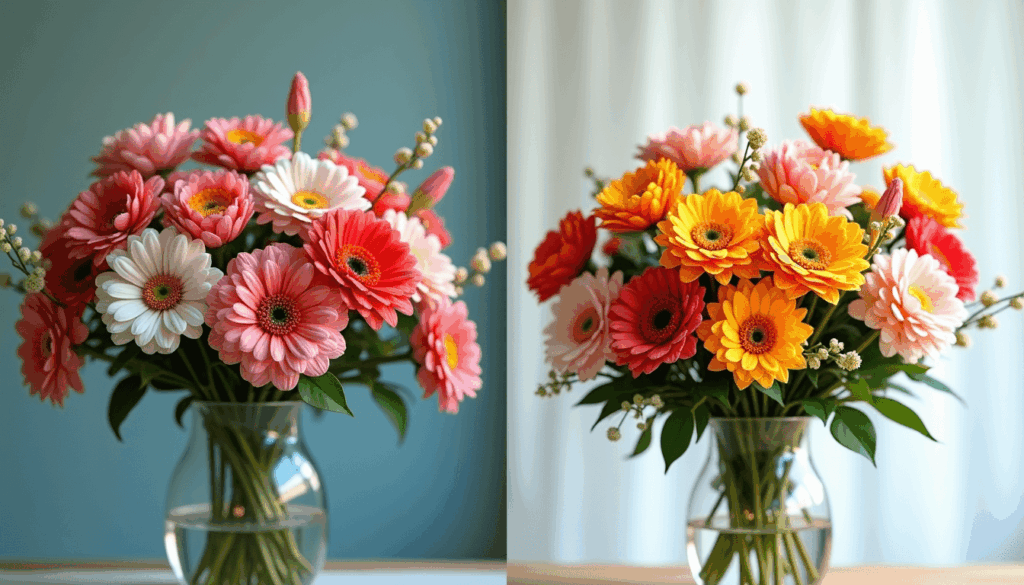
Real Flowers: Charming Natural Beauty
Advantages of Real Flowers
Authentic Sensory Experience – Natural fragrance that enhances ambiance and creates memorable experiences – Organic textures that invite touch and create depth in arrangements – Subtle color variations that add visual richness and complexity
Psychological Benefits – Proven to reduce stress and anxiety through biophilic connection – Creates genuine emotional responses in recipients and observers – Brings literal life and energy to spaces through their natural presence
Environmental Considerations – Biodegradable and compostable after use – Can be sourced locally and seasonally to reduce carbon footprint – Supports local agriculture and floriculture industries
Unique Characteristics – Dynamic evolution as blooms open, mature, and change throughout their lifespan – Each flower has subtle variations making every arrangement truly one-of-a-kind – Seasonal offerings create natural anticipation and celebration of time’s passage
Disadvantages of Real Flowers
Limited Lifespan – Most cut flowers last only 3-7 days even with proper care – Wilting and decay can detract from events lasting multiple days – Requires timing purchases and deliveries precisely for optimal display
Maintenance Requirements – Need regular watering, trimming, and care – May require specialized knowledge for proper handling – Can attract insects if not properly maintained
Cost Considerations – Recurring expense for ongoing displays or long events – Premium pricing for out-of-season varieties – Additional costs for shipping, delivery, and specialized care products
Practical Limitations – Susceptibility to temperature extremes and environmental conditions – Potential allergen concerns for sensitive individuals – Availability constraints based on season and location
Artificial Flowers: Enduring Beauty with Practical Benefits
Advantages of Faux Flowers
Longevity and Durability – Can last years rather than days with minimal degradation – Maintain consistent appearance throughout events of any duration – Withstand handling, transport, and various environmental conditions
Cost Efficiency – Higher initial investment but more economical long-term – No recurring purchase requirements for permanent installations – Elimination of maintenance costs and time investments
Versatility and Reliability – Available in any variety regardless of season or geographic location – Consistent appearance from selection to installation – Can be customized to match exact color schemes and design requirements
Practical Benefits – Zero maintenance requirements beyond occasional dusting – Allergy-friendly alternative for sensitive environments – Suitable for locations where plant care is difficult or impossible
Disadvantages of Faux Flowers
Sensory Limitations – Lack of natural fragrance (though scents can be added artificially) – Textural differences that may be detected upon close inspection – Uniform appearance without the subtle variations of real blooms
Environmental Considerations – Most artificial flowers are made from non-biodegradable materials – Production often involves petroleum-based products – End-of-life disposal challenges if not recycled or repurposed
Perception Issues – Potential stigma or perception of lower quality in certain contexts – Challenges in achieving the dynamic, lived-in quality of real arrangements – Requires higher quality products to avoid appearing obviously artificial
Quality Variance – Significant differences between budget and premium artificial options – Lower quality versions may look noticeably fake or deteriorate quickly – High-end versions require substantial initial investment
Choosing the Right Floral Medium for Different Projects
Weddings and Special Celebrations
Ideal for Real Flowers: – Bridal bouquets and personal flowers where scent and texture are experienced up-close – Ceremony installations that will only need to last hours – High-touch elements where authenticity is prioritized over longevity
Ideal for Faux Flowers: – Destination weddings where sourcing fresh flowers may be challenging – Advance décor preparation to reduce day-of coordination stress – Keepsake pieces intended to preserve wedding memories long-term – Large-scale installations that require construction over multiple days
Home Décor
Ideal for Real Flowers: – Weekly fresh arrangements in high-traffic areas like entryways and dining tables – Special occasion centerpieces and guest room welcomes – Kitchen herb gardens that combine beauty with functionality
Ideal for Faux Flowers: – Permanent installations in hard-to-reach areas (high shelves, tall bookcases) – Spaces with extreme temperature fluctuations or limited natural light – Low-maintenance home staging for real estate showings – Seasonal décor that can be stored and reused annually
Outdoor and Seasonal Projects
Ideal for Real Flowers: – Garden weddings where arrangements complement the natural setting – Summer events when local blooms are abundant and affordable – Short-term installations with access to water and climate control
Ideal for Faux Flowers: – Outdoor winter celebrations where real flowers would freeze – Desert locations or extremely hot venues where wilting is a concern – Seasonal decorations intended for repeated use year after year – Public installations requiring minimal maintenance over extended periods
Flower Selection Tips: Making the Right Choice
Budget Considerations
When to Invest in Real Flowers: – When the event duration is short (under 24 hours) – When fragrance is an essential component of the experience – When the budget allows for seasonal, locally-sourced options – When the arrangement is central to the event’s aesthetic (like a bridal bouquet)
When to Invest in Faux Flowers: – When calculating long-term usage over multiple events or seasons – When the installation needs to remain pristine for more than a week – When maintenance resources are limited or unavailable – When exact color matching to decor elements is critical
Aesthetic Preferences
Choosing Real Flowers When: – Natural, organic aesthetics are central to the design concept – Seasonal themes are being emphasized or celebrated – The arrangement will be photographed in detail or up-close – The setting benefits from biophilic design principles
Choosing Faux Flowers When: – Achieving a specific, uniform look is the priority – Creating dramatic installations that defy natural limitations – Designing arrangements that incorporate non-floral elements – Establishing consistent branded displays across multiple locations
Practical Factors
Real Flowers Make Sense When: – Professional florists are available for installation and maintenance – Climate-controlled environments can preserve bloom quality – The venue permits delivery and setup shortly before the event – Composting or donation options exist for post-event sustainability
Faux Flowers Make Sense When: – Advance setup is required days or weeks before an event – Venues have restrictions on fresh flower deliveries or water usage – The arrangements need to withstand transportation or shipping – Storage space is available for reusing arrangements in future events
Emerging Floral Trends and Innovations
The distinction between real and faux flowers continues to evolve as new technologies and approaches emerge. Some noteworthy developments include:
High-Definition Printing Technologies Advanced printing techniques now allow for incredibly realistic petal texturing and color gradients in premium artificial flowers, making them nearly indistinguishable from real blooms in photographs.
Preserved Fresh Flowers The middle ground between real and artificial, these are actual blooms that undergo special preservation treatments to extend their lifespan to months or even years while maintaining much of their natural appearance and texture.
Biodegradable Artificial Options New eco-friendly artificial flowers made from sustainable materials like bamboo fiber, corn starch, and other biodegradable elements offer environmentally conscious alternatives to traditional silk and plastic varieties.
Smart Integration Some high-end artificial arrangements now incorporate subtle technology elements like embedded LED lighting, fragrance diffusers, or color-changing capabilities that enhance their functionality beyond mere decoration.
Not a Simple Choice: Real Flowers or Artificial Flowers?
The choice between real and artificial flowers is not simply a matter of authenticity versus convenience, but rather a nuanced decision that should align with your specific project requirements, budget constraints, and aesthetic goals. By thoughtfully evaluating the advantages and limitations of each medium, you can make informed choices that maximize impact while minimizing unnecessary costs and complications.
Many successful designers are increasingly adopting hybrid approaches, selectively using real flowers where their natural properties add significant value and high-quality artificial elements where longevity and consistency are paramount. This balanced strategy often delivers the most satisfying results across a wide range of decorative projects.
Whichever floral medium you choose, remember that quality matters tremendously. Well-designed arrangements with appropriate flowers for the setting will always create more impact than poorly executed concepts, regardless of whether the blooms are real or artificial.